A project team in the European Quarter: which coworking space fits your work and meetings?
Updated: 5 hours ago

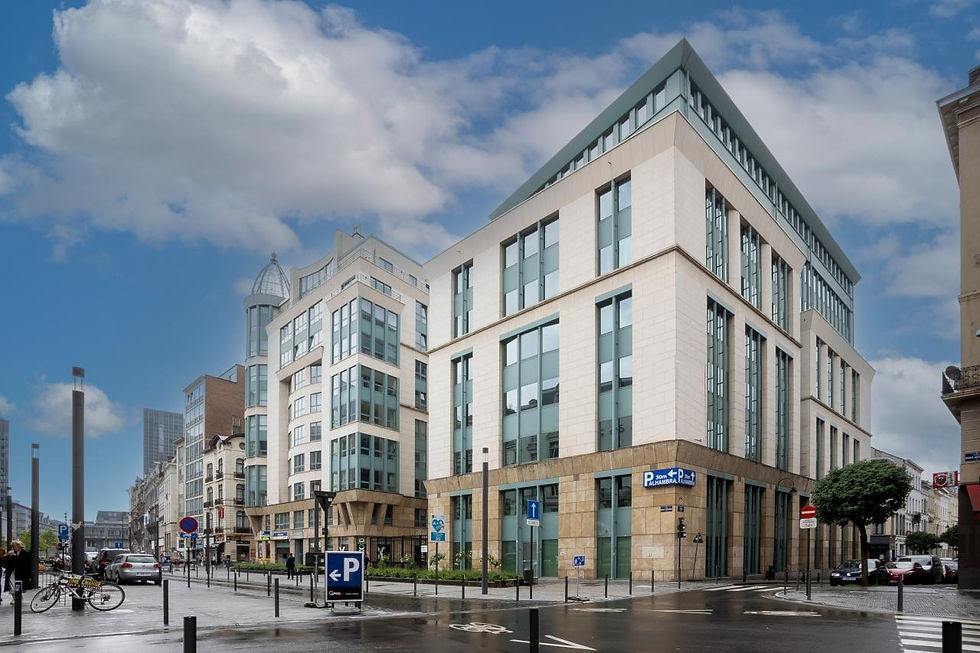
Exterior of the Meeus 40 building in Brussels
The right coworking space for a project team must handle changing attendance and a busy meeting schedule. An address in the European Quarter may suit your appointments, but does not guarantee desks together or a meeting room at the required time. Start with a working calendar before choosing a membership package.
Looking for coworking space in the European Quarter? Compare private offices, included services and contract terms with Mesh-immo. Compare coworking spaces · View available offices · Request a tailored selection
Browse coworking spaces for your team in Brussels with your meeting destinations, shared attendance days and guest requirements in mind. Each shortlisted address can then be tested against the same operating scenario, making differences easier to identify.
1. Translate the project into actual working days
Describe both a normal week and a peak week. How many people stay all day? Who attends only for a meeting? Who travels from abroad? Separate regular team members, visiting colleagues and external guests, as they may be subject to different entry and membership arrangements.
Consider a fictional four-month project involving six people. Only three attend daily, but all six gather on Tuesdays with two guests. The requirement is not simply “three desks”. It includes confirmed capacity for the shared day, a suitable meeting room and a guest arrival process. Record any deadlines likely to increase attendance, and distinguish essential group sessions from work that can be done independently.
2. Distinguish desks, project space and meeting rooms
A desk supports individual work, a project space provides continuity for a team, and a meeting room hosts a time-limited session. Do not assume one can automatically replace another. Establish whether the group can sit together, keep project material on a board and make simultaneous calls without disrupting other members.
For rooms, ask about usable capacity, included hours, available booking windows and reservation rules. Have the operator price any additional use against your peak-week scenario. That is an offer-specific calculation, not a market average. A package that works during quiet weeks may become impractical when every meeting requires a separate booking with uncertain availability.
3. Test guest arrivals and hybrid meetings
A guest’s experience begins before reaching the meeting room. Check arrival instructions, reception hours, the languages actually available and badge arrangements. Who assists if a delegation arrives early or the meeting organiser is delayed? Ask whether guests can wait without entering working areas.
Then run a short hybrid meeting using your own equipment. Check sound for remote participants, screen sharing, connections and guest internet access. With the operator’s permission, assess whether conversations can be understood from circulation areas. Equipment shown in a photograph does not establish meeting quality. A brief rehearsal can reveal the adjustments your team will need and clarify who provides assistance when something fails.
4. Compare actual addresses, not proximity claims
List the destinations you use repeatedly: institutional appointments, partners, hotels and railway stations. Check the complete journey from each building, at relevant times and using the intended transport mode. A location described as “Schuman” or “European Quarter” is not a substitute for testing the route.
Listings for Meeus 40 and Belliard coworking offer starting points for an address comparison. They do not guarantee journey times, membership terms or current availability. Check the return journey after evening meetings too, especially if team members do not all use the same station or transport mode.
5. Confirm duration and changes in team size
Request conditions for your specific project: minimum term, notice, extensions, additional members and changes of workspace. A verbal suggestion that you can expand should be linked to capacity, timing and confirmed pricing. Clarify whether expansion means staying together or moving part of the team elsewhere.
Prepare a one-page agreement checklist covering daily attendance, peak days, guest access, room hours and project dates. Separate essential requirements from flexible preferences. Before committing, confirm rules for replacing a named member and requesting a late extension. You can then compare two proposals on the working arrangement they support, not just on package names.
FAQ
Can we take space for just a few months?
Some operators offer this. Confirm the minimum term, notice period and extension conditions for the chosen offer, particularly when the project end date is not yet certain.
Are meeting rooms included?
This depends on the package. Check included hours, room capacity, equipment, opening times and charges for extra use or cancellations before building your meeting schedule.
Can visiting colleagues use our desks?
Named membership and access-sharing rules differ. Obtain written confirmation, including the case where different colleagues use the same desk on different dates.
Is Schuman always the best location?
No. Start with actual appointments, stations and guest journeys. Compare precise European Quarter addresses rather than assuming one location suits every project team.
Your next step
Share your timetable and team numbers with Mesh-immo. A normal week and a peak week provide a useful basis for selecting spaces to test with operators.