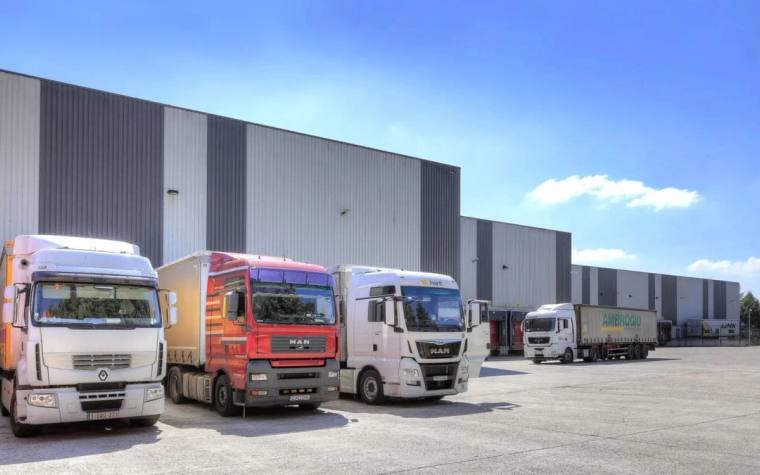
Loading docks and articulated lorry access: how do you test a warehouse before renting?
A loading dock in a photograph does not establish that your deliveries will work. Follow the full journey from the site entrance to receiving and storage.
Rental and commercial real estate
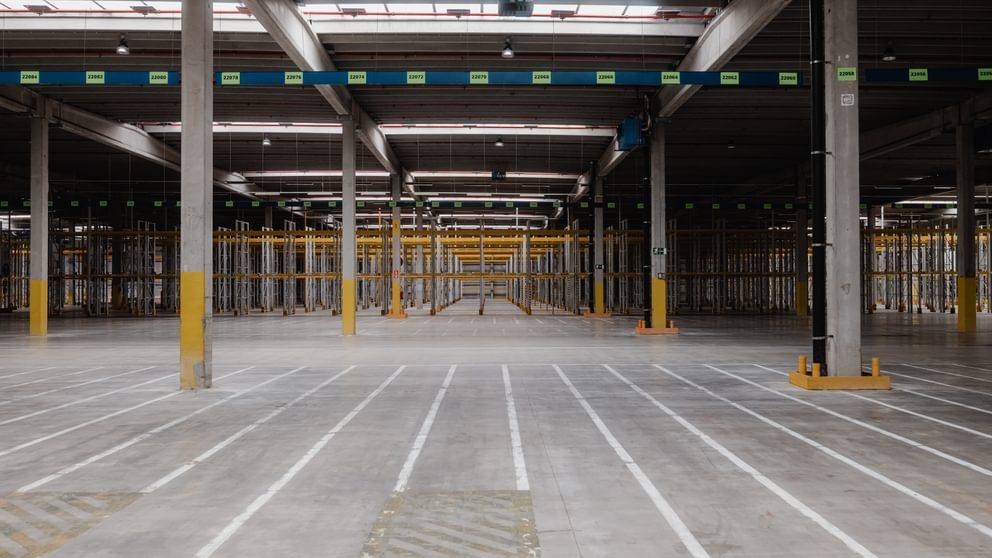
Warehouse interior with marked circulation areas
The advertised rent is a starting point, not the full occupancy budget. Warehouses with similar rents per square metre can generate quite different expenditure once service charges, energy, adaptations and operating effects are included. Compare them against the same business requirement, over a common period, using assumptions that everyone involved can see.
The aim is not false precision. An unpriced item should stay visible as an unknown rather than quietly disappear from the spreadsheet. This framework supports a property comparison; it is not personalised tax or financial advice for your business.
First define what each building must accommodate: usable stock, picking, receiving, dispatch, offices and circulation. A larger warehouse can look attractive on a unit-rent basis while charging the business for space it does not need. A smaller option may require extra handling or provide insufficient capacity during peaks. Neither outcome is captured by the advertised area alone.
Ask which areas are charged and how the rent is calculated. Distinguish warehouse, offices, mezzanine and external space as relevant to the offer. Put amounts on the same time basis and record any rent-review provisions in the draft agreement. Do not apply assumptions from one lease to every property under consideration. Check each proposal on its own terms. If offers serve different functions, our guide to warehouse types can help clarify the requirement before comparing budgets.
Create a separate line for rent, common service charges, energy, water, insurance requirements and any taxes passed on under the applicable arrangements. Record the amount, source, period, inclusions and person responsible for confirmation. Distinguish an advance payment from a past reconciliation or a quotation: they do not provide the same level of certainty.
The treatment of Belgian property tax and other tax-related items needs to be checked against the agreement and applicable rules. Assume neither inclusion nor automatic recharge. Clarify the VAT treatment of relevant figures as well, so the comparison does not add amounts presented on different bases. Have your adviser validate that part of the calculation before relying on its financial conclusions.
List equipment on which the operation depends: doors, loading docks, heating, specialist installations and operating equipment. Establish who arranges maintenance, inspections, repairs and replacement. The presence of an installation does not mean that the landlord pays all expenditure associated with it. Ask about responsibility for existing issues as well as future servicing.
Separate initial outlays such as fit-out, racking, connections, relocation and any transition period. Then examine potential end-of-occupation obligations: removal, repairs, cleaning or reinstatement under the contractual documents. A deposit ties up cash but is not automatically a consumed expense. Showing these items separately makes both the economic comparison and the timing of funding needs clearer.
Property payments are not the whole picture. A building may change delivery routes, handling time, vehicle waiting or the need for external storage. Ask your operations team to assess those effects using the same activity volumes and service requirement for each site. Avoid assigning an apparent saving to a process change without checking how it will work.
In a wholly fictional example, building A offers lower rent but requires an extra handling stage. Building B has a higher rent but simplifies the goods flow. The better choice cannot be established without checking the cost and frequency of that extra handling. This example describes no Mesh-immo property and provides neither a market average nor a promise of operating savings.
Use a common comparison sheet: initial payments, recurring expenditure, foreseeable one-off items, exit costs and operational effects. Give each entry a status such as “confirmed”, “estimated” or “information required”. An empty cell must never be treated as zero. Retain dated quotations and reconciliations together with the assumptions that make them relevant to your scenario.
Then test what could change the result: higher activity, different energy consumption, additional adaptations or an earlier departure. These are sensitivity checks, not predictions. Their purpose is to reveal which questions deserve attention before commitment. Compare warehouses to rent using the complete scenario budget, with unresolved items clearly shown alongside the advertised rent.
No. Align areas and periods, then add excluded expenditure and differences in service. A unit price alone does not describe the total occupancy budget.
Do not assume a universal rule. Check the agreement and applicable regime, then record the items the tenant actually bears in the scenario being assessed.
Yes, in the economic comparison. Keep initial payments, recurring expenditure and exit costs separate so that both the amount and timing of funding requirements remain visible.
Start with the same capacity and service requirement. Establish what is needed to deliver it in each building, then compare complete budgets, including unused space or extra operations.
To discuss a documented warehouse comparison, send Mesh-immo your brief and shortlisted offers. We can help organise missing property information before your business makes its decision.
Loading docks and articulated lorry access: how do you test a warehouse before renting?
Heated, insulated or temperature-controlled warehouse: what do your goods need?
Renting or buying a warehouse in Belgium: how do you compare the options?
A loading dock in a photograph does not establish that your deliveries will work. Follow the full journey from the site entrance to receiving and storage.

Buying does not automatically become the better choice after a fixed number of years. Compare complete scenarios over the same horizon and test the assumptions that matter.
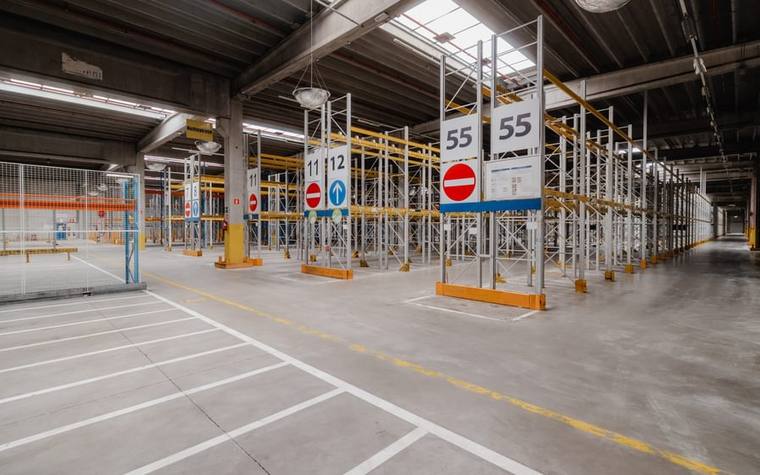
Floor area and a high roof do not guarantee useful storage capacity. Match the building to your goods, handling equipment and day-to-day operation before committing.