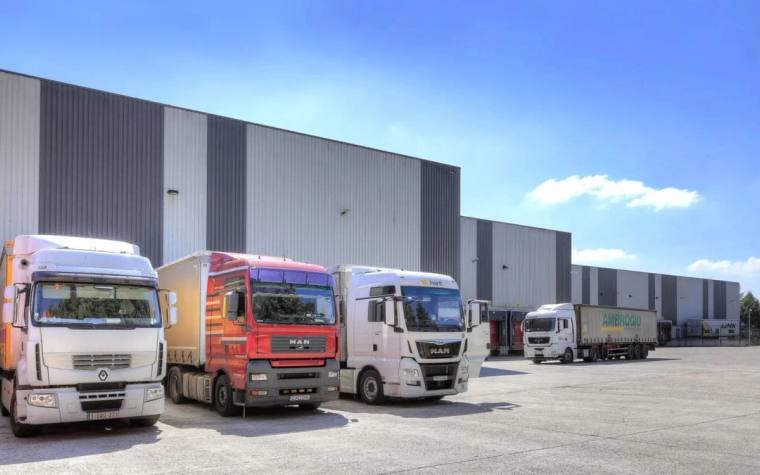
Loading docks and articulated lorry access: how do you test a warehouse before renting?
A loading dock in a photograph does not establish that your deliveries will work. Follow the full journey from the site entrance to receiving and storage.
Rental and commercial real estate

Architectural visualisation of the Panier Vert development in Nivelles
There is no universal occupation period after which buying a warehouse automatically becomes preferable. The answer depends on the property, the stability of operations, available capital, required works and the eventual exit. A business may want greater control over its location without a purchase being the right immediate commitment.
The useful comparison is between two premises strategies that can deliver the same operational service over a common horizon. Keep the occupier’s business needs separate from an investor’s search for property returns. This educational framework is not personalised financial, tax or investment advice and cannot replace assessment of your company’s circumstances.
Describe current needs and plausible changes in stock, people, equipment, delivery geography and expansion requirements. Consider whether the building would remain useful if any of these changed. Highly specialised premises may be an excellent fit today while leaving fewer options for a different operating model later. Make those dependencies explicit before considering tenure.
Renting can support flexibility, but only where the proposed contract actually allows it. Check term, exit arrangements, alterations and possible expansion. Ownership offers different control, but does not make every alteration permissible or every extension achievable. Assess specific rights and constraints rather than associating either option with an undefined promise of freedom. Both scenarios need practical evidence.
For renting, distinguish initial payments, recurring expenditure and cash tied up rather than spent. For buying, obtain a project-specific assessment of acquisition, transaction costs, works and any proposed financing. Ask for terms relevant to the company’s actual position rather than relying on a theoretical interest rate presented as available to every purchaser.
Do not compare annual rent with a loan instalment in isolation. Map cash flows and payment dates, with your accountant distinguishing their different nature. Capital committed to property should also be considered alongside operating needs such as equipment, stock, recruitment and contingency funding. The decision concerns the business’s resources as a whole, not just the relative size of two property payments.
Both scenarios should include maintenance, insurance, energy, works and other expenditure actually borne, using the appropriate documents and advice. For ownership, examine the owner’s responsibilities and foreseeable technical interventions. For renting, do not assume every replacement is the landlord’s responsibility; verify the contractual allocation and the condition of existing installations.
Then assess leaving the premises. A lease may involve reinstatement obligations. Ownership may involve selling time, transaction costs and uncertainty over the eventual price. A residual value is a supported assumption, not guaranteed income. Test a less favourable exit instead of relying only on the valuation that makes purchasing look attractive. Record the evidence and the date behind any valuation input.
Acceptable financing does not make a warehouse suitable for operation. Have the relevant specialists review planning and environmental position, permitted activity, technical condition, rights and burdens, access, installations and adaptation costs. Request evidence relevant to the intended operation, not merely the information needed to market the property.
Taking a lease or buying the building must not be confused with transferring an authorised operation. The Walloon procedure for transferring an establishment illustrates that distinction. Confirm the steps for the actual region and project. With your notary or legal adviser, establish which unresolved matters need to be addressed before a commitment and how they affect the proposed timetable.
Consider two entirely fictional examples. A business with changing delivery territories examines a lease offering suitable exit arrangements. Another, with a stable process closely tied to specialist fit-out, investigates buying. Neither example establishes a winner. Prices, works, financing and risks still need evidence, and no property or company is being described as a market benchmark.
Build a decision matrix covering operational fit, cash commitment, contractual flexibility, adaptations, responsibilities and exit. Mark confirmed information and unknowns. Repeat the assessment with shorter occupation, higher works expenditure or a slower sale. If a single assumption drives the whole decision, make verifying it a priority rather than burying it in a spreadsheet.
Finally, compare warehouses for sale and warehouses to rent against the same operating brief. The ownership decision follows evidence that each building can actually serve the business.
No. The outcome depends on price, works, financing, useful occupation period, exit and the flexibility the business needs. A fixed break-even duration cannot settle every project.
Not on their own. Ask your financial and accounting advisers to include the other cash flows, payment timing and differences between occupying and owning a property.
Have planning and environmental position, technical condition, rights and burdens, available documents and required adaptations examined. Their significance depends on the property and intended operation.
That cannot be guaranteed. Assess local demand, permitted use, quality, potential subdivision and market conditions. A market label is not an assurance that a buyer will be available.
To compare rental and purchase options against your brief, discuss your project with Mesh-immo. We can structure a property shortlist for review with your accounting, banking and notarial advisers.
A warehouse with offices: how do you combine stock and staff on one site?
Renting or buying a warehouse: which permits and safety documents should you check?
What does renting a warehouse really cost beyond the headline rent?
A loading dock in a photograph does not establish that your deliveries will work. Follow the full journey from the site entrance to receiving and storage.
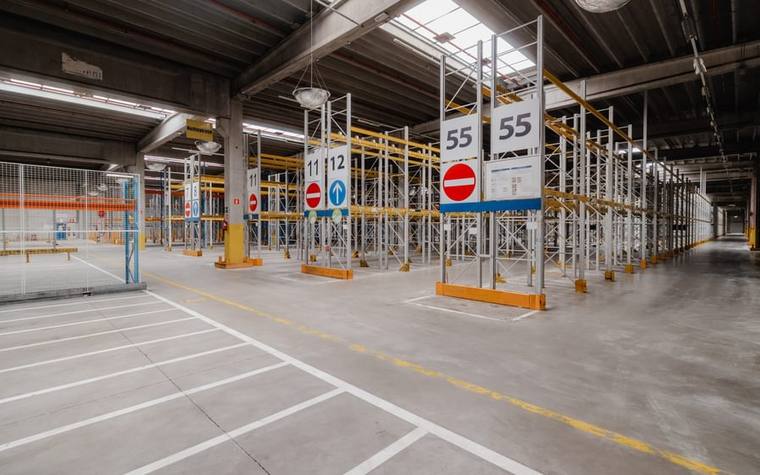
Floor area and a high roof do not guarantee useful storage capacity. Match the building to your goods, handling equipment and day-to-day operation before committing.
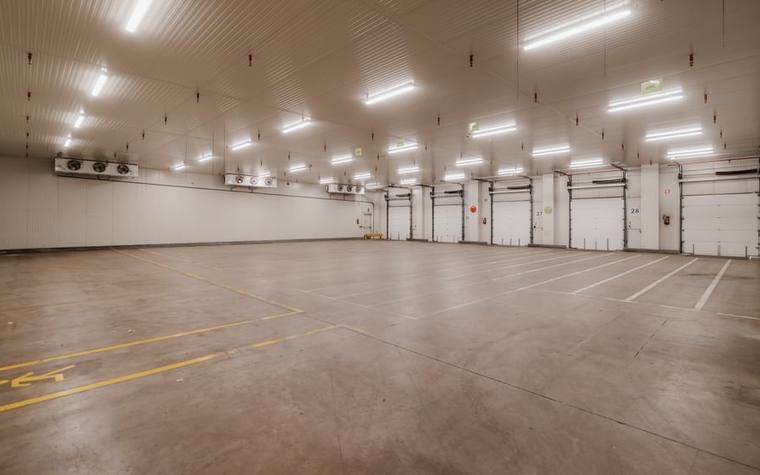
“Insulated” and “heated” are not performance guarantees. Match your products’ requirements to conditions the building can actually maintain before choosing premises.