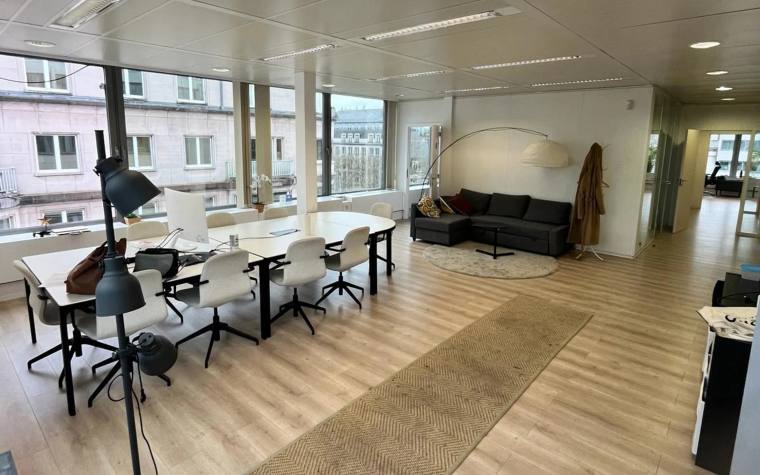
Brussels Office Leases: Flexibility Clauses to Discuss in 2026
Term, exit options, works and move-in date: the clauses to clarify before signing an office lease in Brussels.

A common law lease is a rental agreement used for properties not intended as a primary residence. It is often used for:
Unlike a residential lease, a tenant cannot declare the property as their official main residence. This lease is governed by the general rules of the Belgian Civil Code, giving the parties a high level of contractual freedom.
Planning to rent an office?
Compare available spaces, rents and lease terms with Mesh-immo.
View available offices · Compare coworking spaces · Request a tailored selection
A residential lease is tightly regulated. In Brussels, it falls under the Brussels Housing Code, while in Wallonia it is governed by the Decree on Residential Leases. These laws impose strict rules on:
The parties cannot freely modify these legal requirements, as the law aims to protect tenants.
In contrast, a common law lease is not subject to these constraints. The landlord and tenant can freely agree on:
This makes it particularly well-suited for office rentals, commercial spaces or secondary use properties.
With a common law lease, both parties can include specific clauses, such as:
This flexibility is a strong advantage to tailor the contract to the exact needs of each party.
However, this freedom also means there is no legal safety net like there is for primary residence leases. If the contract is vague or incomplete, disputes can become hard to resolve. It is therefore crucial to carefully draft the lease, anticipating possible scenarios.
To ensure legal security and avoid unpleasant surprises, a common law lease should clearly set out:
In Belgium, the commercial lease act only applies to premises where a retailer or craftsperson deals directly with the public. An office floor therefore almost always falls under a common law lease. The “3-6-9” structure found in most office leases is not required by law: it is market practice, and every break option can be negotiated.
Term and exit: a nine-year lease with a break every three years is common, but a young company can ask for a first exit after 12 or 24 months, with notice and sometimes a break fee.
Rent: stepped rent over the first years, or a few rent-free months during fit-out, are frequent concessions in exchange for a longer commitment.
Charges and works: the contract can put everything on the tenant. Read exactly who pays for maintenance, major repairs and reinstatement when you leave.
Registration: the lease must be registered within two months of signing. Both parties are responsible, so agree who will do it. A registered lease remains enforceable against a new owner if the building is sold.
The common law lease in Belgium is appealing thanks to its flexibility and the ability to precisely adapt the contract terms to the realities of each rental. But this freedom also demands greater responsibility.Without the protective framework of residential leases, the quality of the contract is the only safeguard against future disputes. It is therefore strongly recommended to draft a clear, balanced and thorough lease, or to have it drawn up by a professional.
A residential lease is strictly regulated and offers tenants strong protection (minimum durations, mandatory notice rules, capped indexation). A common law lease allows parties almost complete freedom to set the duration, rent amount, termination terms, and other obligations.
No. A common law lease does not allow the tenant to declare it as their primary residence. If they wish to do so, a specific residential lease must be signed, otherwise the courts could reclassify the contract.
It is essential to clearly state:
Yes. Lease registration is mandatory in Belgium, even for common law leases. It must be done within two months of signing to be enforceable against third parties.
A lawyer specializing in real estate or an experienced real estate agent like Mesh-immo can draft a clear, balanced lease that aligns with your interests and complies with Belgian legal practices.

Related articles
→ Brussels Office Leases: Flexibility Clauses to Discuss in 2026
→ Commercial lease in Belgium: A complete guide
→ Your rights and obligations in rental agreements: A comprehensive guide
Term, exit options, works and move-in date: the clauses to clarify before signing an office lease in Brussels.

Learn how to start a business in Brussels, the steps and timelines involved, and which type of office suits freelancers, startups, and SMEs.

Learn about EPC NR requirements in Flanders from 2025 for non-residential buildings over 1,000 m². Key deadlines, labels and tips for owners and investors.