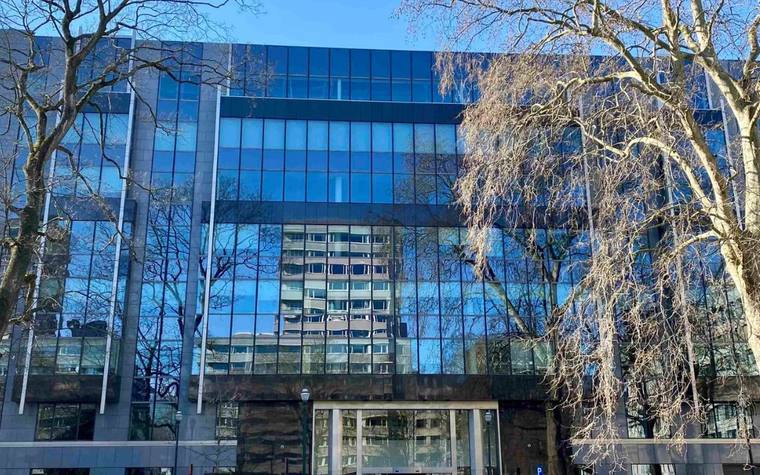
A project team in the European Quarter: which coworking space fits your work and meetings?
A temporary team needs more than a desk count. Use its real timetable to check room availability, guest arrangements and usable capacity.
Coworking and flexible offices
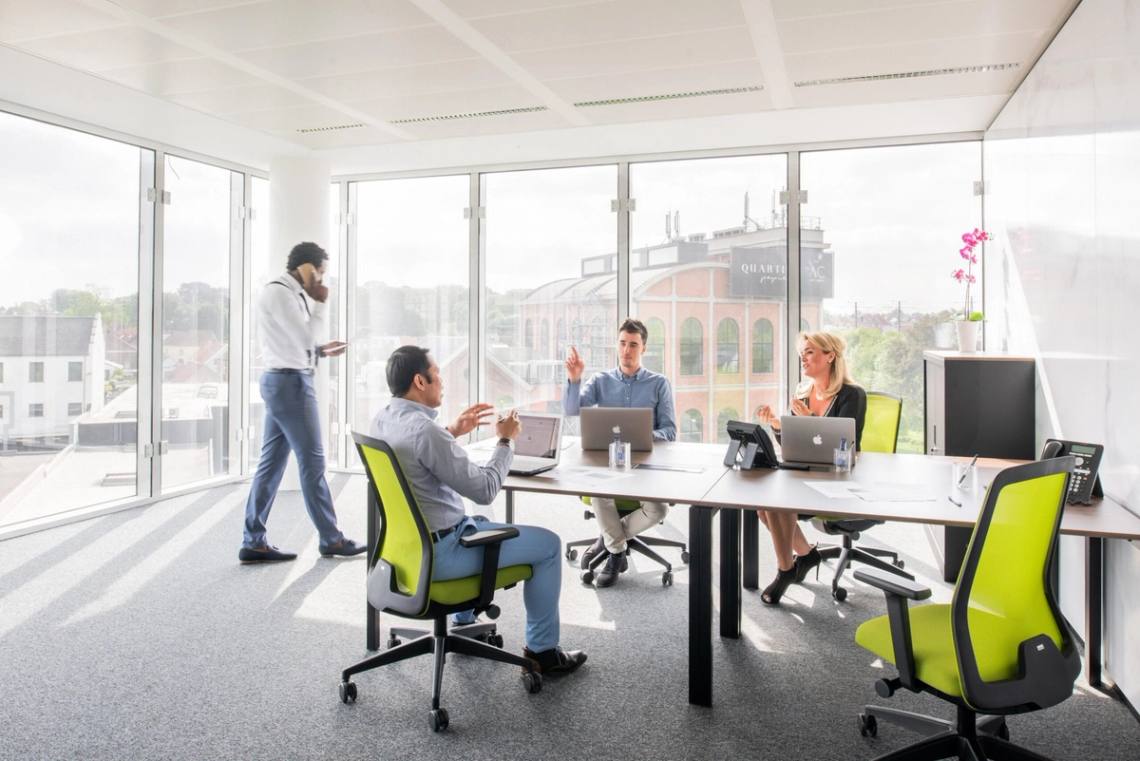
Meeting in a glazed office at Corporate Village
For a travelling team, a coworking base should make transitions manageable: arrive, work, meet and leave. The right address depends on your actual journeys, not simply the word “airport” in a description. Being in Zaventem does not establish a walkable route from the terminal or access that suits every arrival time.
Looking for coworking space in Zaventem and the surrounding area?
Compare private offices, included services and contract terms with Mesh-immo.
Compare coworking spaces · View available offices · Request a tailored selection
Start with coworking spaces available in Zaventem and the surrounding area. Compare them using a complete scenario with journeys, working periods and contingency time. Then confirm the conditions for each space and package rather than assuming that nearby addresses provide equivalent services.
A team arriving by air, salespeople driving between appointments and regular commuters have different requirements. Record each group’s starting points, typical times, frequency and equipment. Establish whether people work independently or everyone must gather for a meeting at a fixed time. The answer affects which part of the journey needs the greatest certainty.
Include guests as a separate group. A client staying for an hour may need different parking arrangements from a colleague present for several days. Distinguish predictable attendance from requests made the evening before. This prevents choosing for an imaginary frequent flyer when most of your actual use depends on another transport mode or a different pattern of arrival.
Use the exact workspace address and your real arrival point: terminal, railway station, hotel or appointment location. Check the transport mode, any changes, the final section and the return journey. Date your observations and consider the times when you will use the route. A one-off estimate should not become a guaranteed travel time.
Test with realistic constraints such as luggage, a laptop, bad weather or a fixed appointment. If you depend on a shuttle or another service, confirm its operation, timetable and conditions before building it into the schedule. A map can suggest proximity without showing whether a walking route is practical or whether a service runs when you need to leave.
Ask for both reception hours and member-access hours, as they may differ. Establish how initial access is activated, whether early or late arrival is possible and whom to contact if a badge fails. A member’s access rights do not automatically extend to guests or colleagues who have not been registered.
Check which facilities remain usable during those hours: reserved rooms, connectivity, printing and shared areas. If a meeting precedes a departure, establish whether you can prepare the room before participants arrive. Obtain confirmation for the chosen package rather than relying on a general statement about extended access. An accessible door is only one part of a usable working arrangement.
Identify parking that members can use and spaces available to guests. Check reservations, permitted duration, vehicle dimensions and charges. Permission to park during a meeting is not permission to leave a car during a business trip. Resolve that distinction before building your travel routine around the location.
Ask where luggage can be kept and whether lockable storage is available. Test the move from an individual workstation to a meeting room with your actual equipment. The Impéria 18 listing provides a starting point to examine. It does not by itself establish luggage services or the parking and access conditions attached to your membership. Those require offer-specific confirmation.
Consider a fictional day when two colleagues arrive using different transport modes, work separately and meet a client before one leaves. Write down the entire sequence: arrival at the transport point, onward journey, building entry, preparation, meeting, clearing up and return travel. Set buffers according to your own obligations, not a universal allowance.
Then test a delayed journey or an overrun. Who informs the client? Could the room be extended if available? Is there an authorised way to work later? Ask how occasional bookings work and what notice they require. The useful choice is the space whose conditions remain clear when the day changes, not the one making the strongest general claim about proximity.
Not necessarily. Check the address, complete route and travel mode. The municipality’s name does not establish pedestrian access from the terminal to the workspace.
Badge and reception hours may differ. Confirm both, including first-time activation and the assistance procedure if you arrive when no reception staff are present.
Check guest spaces, booking and permitted duration. Do not assume that a member’s parking rights automatically apply to visitors or extend to any length of stay.
Ask about occasional packages, reservation notice and actual access to the facilities you need. Entry rights alone do not guarantee the required room or desk at the right time.
Share your travel-day scenario with Mesh-immo: arrival modes, timings, team size and meetings. This provides a basis for testing a workspace without confusing geographical proximity with practical usability.
A project team in the European Quarter: which coworking space fits your work and meetings?
Part-time coworking in central Brussels: how do you choose a membership that works?
A temporary team needs more than a desk count. Use its real timetable to check room availability, guest arrangements and usable capacity.
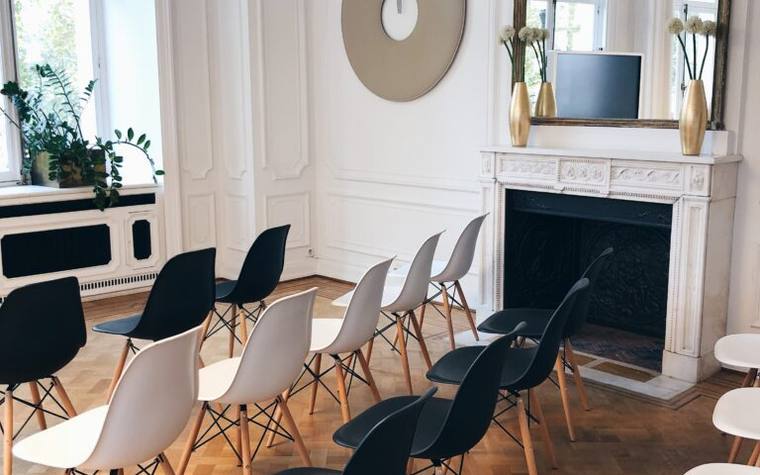
A successful meeting depends on the visitor’s entire experience, not just the room. Follow the route from the entrance to departure before deciding.
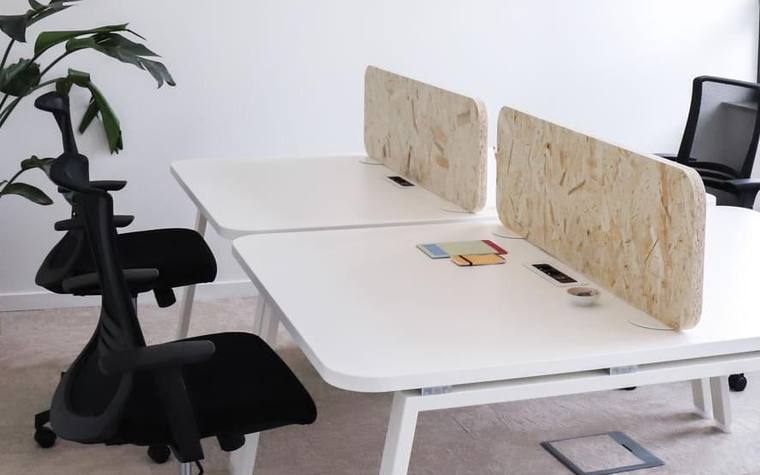
An enclosed office does not automatically make a conversation private. Test the space against the way your team actually works before committing.